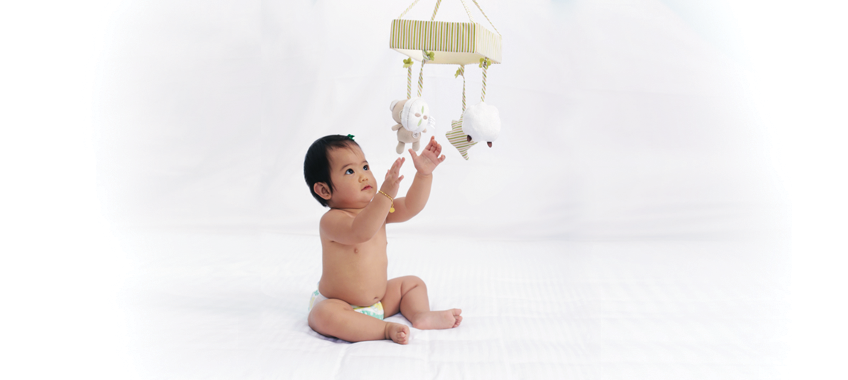
Once your baby discovers their hands, a world of wonder awaits them. Although learning to walk is a big milestone in your baby’s development, mastering their fine motor skills is no small achievement. According to Pediatric Occupational Therapist Dr. Rhoda Erhardt, it is through their hands that your baby demonstrates the link between thought and action. Developmental experts also say that manual dexterity is directly tied to cognitive development.
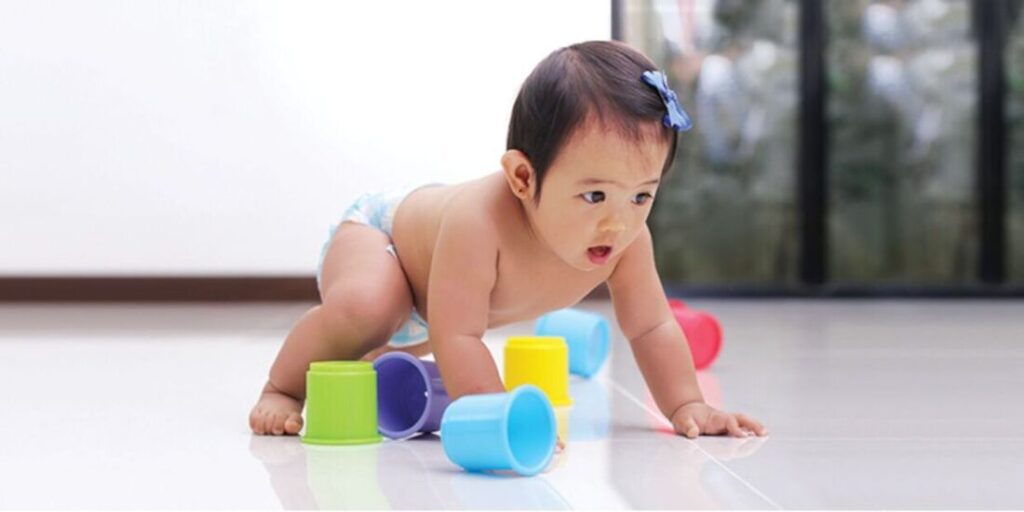
Babies don’t realize they can use their hands until they are about 2 months old. At around 2 to 4 months, they begin reaching for and swatting at objects as they learn how to control their movements. This is a great time to introduce simple activities that help strengthen your baby’s fine motor skills while making playtime more enjoyable.
Below are some activities that help develop your baby’s fine motor skills.
Fine Motor Skills Activities for Babies by Age
1. Hold It Tight (6 months and older)
Objective: This activity helps your baby learn how to develop grip.
Materials:
Any object or toy that fits comfortably in your baby’s hand, such as toy rattles or small stuffed toys. Choose soft toys or toys that won’t hurt your baby if they accidentally drop them.
How to do it:
- Pick one of your baby’s toys.
- Gently press the toy to your baby’s palm and help them close their fingers around the toy.
- Once your baby closes their hand around the toy, let go of it and see if they can hold onto the toy on their own.
- If your baby is unable to hold on and drop the toy, just pick it up and put it back in their hands for them to try again.
- Be sure to use a soothing voice and have a lot of patience when teaching your baby. Repeat all the steps until they learn to grip different toys.
2. Texture Box (9 months and older)
Objective: This fine motor skill activity introduces different textures and encourages your baby to explore with their hands.
Materials:
A box filled with objects of various textures, such as velvet and silk cloth swatches, smooth and rough fruits (such as apples and oranges), and other baby-safe household items.
How to do it:
- Set your baby on the floor.
- Show your baby how to pick up the different objects inside the box.
- Try to get your baby to pick them up one by one.
3. Transferring Toys (12 months and above)
Objective: This activity teaches your baby to grip onto an object and how to let go of it.
Materials:
- Two Boxes
- Soft toys of different shapes and sizes (stuffed toys, squeaky toys, plastic balls, etc.)
How to do it:
- This activity only works if your baby is able to sit up by themselves and crawl around.
- Place the boxes at least two feet apart and set your baby down between them.
- Fill one of the boxes with toys of different sizes.
- Teach your baby how to pick one toy up from that box and put it in the other box. Repeat the process until all the items have been transferred to the other box.
- Encourage your baby throughout the activity until they finish transferring the toys.
Remember to be patient and celebrate every successful transfer.
4. Play with Clay (18 months and older)
Objective: This activity develops your baby’s finger control, improves hand-eye coordination, and introduces them to colors and shapes.
Materials:
- Modelling clay (different colors)
How to do it:
- Set your baby on the floor beside you.
- Take a handful of the modelling clay and mold it into any shape. Make sure to mold simple shapes that your baby can copy, such as triangles, squares, or circles.
- Encourage your baby to copy the shapes that you made using the same colors that you used to mold the shapes.
5. Cool Colors! (18 months and older)
Objective: This fine motor skill activity strengthens your child’s grip while improving hand-eye coordination and color recognition.
Materials:
- Coloring books
- Crayons (preferably non-toxic and larger in size for an easier grip)
How to do it:
- Set your baby on the floor with the coloring book propped open.
- Help them pick out a crayon and let them hold it.
- Slowly guide their hands in coloring the shapes and pictures in the book with the colors they like.
- Once they have a strong grip on the crayon, let go of their hands and let them finish coloring the pages by themselves.
Helping Your Baby Develop Fine Motor Skills Through Play
Developing fine motor skills doesn’t have to be complicated. Through simple, age-appropriate activities like these, your baby can strengthen their hand muscles, improve coordination, and build skills they’ll use throughout childhood.
Most importantly, remember that every child develops at their own pace. Enjoy these playful learning moments together and celebrate every milestone, no matter how small.
We hope this guide has answered your questions. If there’s anything else you’d like to know about our products or if you need assistance, feel free to contact our EQ support team.
Sources:
http://www.parents.com/baby/development/physical/encouraging-baby-motor-skill-development/
http://www.parents.com/baby/development/physical/fine-motor-milestones/
http://theimaginationtree.com/2014/03/fine-motor-skills-activities-babies.html