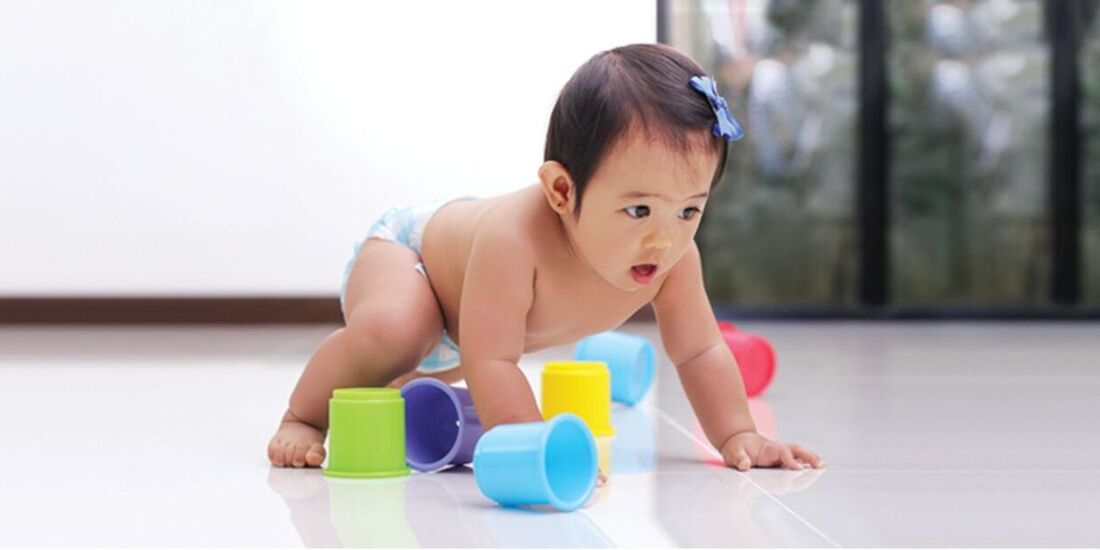

Potty Training 101: A Parent’s Guide to Toilet Training Your Child

Potty or toilet training is a special time in your baby’s life. For the child, the challenge is developing control over their bladder and stomach, and applying this newfound skill as they try to understand their parent’s instructions. For the parents, it’s learning to effectively teach something second nature to them and explain it to a beginner – overwhelming, but doable. As with any cooperative effort, communication and patience go a long way.

If you think it’s time to start potty training your child, consider the following:

Is Your Child Ready for Potty Training?

According to Dr. Mark Wolraich, professor of pediatrics at the University of Oklahoma Health Sciences Center, “The average age at which a child will start to show interest in learning to potty train is around 2 years, but it’s a bell shaped curve – some will go earlier and others not until 3 or even 4.”

While there is a general age range, every child becomes ready for potty training at their own pace. Your job is to assess your child’s behavior and watch for certain signs.

Your child might be ready if they:

  • Look for privacy or go quiet when they pee or poop in their diaper
  • Show interest in the toilet or in wearing underwear
  • Can follow basic instructions
  • Express through facial reactions or words when they need to go
  • Stay dry during the day for 2 hours or longer
  • Complain about wet or dirty diapers

How to Potty Train Your Child Successfully

Lead By Example

From time to time, take your child to the bathroom with you when you have to go. Let your child observe how you use the toilet and wash your hands after you’ve finished. This helps your child understand how going to the potty works and what it looks like.

Be Mindful and Respond Quickly

When you see your child showing signs of needing to use the toilet (such as squirming, squatting, or holding the genital area), act on it right away and take them to the toilet. This helps your child identify these signals faster and become accustomed to using the potty.

For girls, show them how to wipe carefully from front to back. Explain that this prevents germs from the rectum area from reaching the vagina. They may not understand this yet, but it’s never too early to start instilling good hygiene in your child.

Positive Reinforcement

Each time your child successfully goes potty, give them verbal praise and be positive to encourage them. Even when they aren’t successful, stay positive. Never punish them and make them feel that the toilet really is a comfort room and they are not to be punished for using it. Never punish your child for accidents. Instead, reassure and encourage them so they continue to feel comfortable using the toilet.

Set a Schedule

It’s good to be consistent. Suggest going to the bathroom at set times of the day like when they wake up in the morning, before riding the car, after dinner, and before bedtime, among others. Even if they end up not going, it’s still encouraged to have them sit on the potty a few minutes at a time throughout the day. This is a good way to condition them to use the toilet.

Bye-Bye Nappies

If your child has used the toilet consistently for a couple of weeks, you can get rid of the nappies.

While your child might be able to stay dry during the day, nap and sleep time is different. Kids are usually deep sleepers and often sleep through what would’ve been a potty session. Staying dry through the day and nighttime sleep may take months or years compared to the two to three months it takes them to learn to control their bladder when awake. For this, consider disposable training pants.

Anticipate Accidents

Learning to use the toilet takes time, and accidents are a normal part of the potty training process. Tell your child it’s all right and ask them to help you clean up. Take the opportunity to gently remind them to use the potty next time.

Rain Check on Training

If your child resists or is having a difficult time using the toilet within the first few weeks, maybe he just isn’t ready yet. You can hold out for a few months.

Also, know that major events and life changes can make potty training difficult. For instance, moving to a new home or a death in the family can cause your child’s potty skills to regress or return to a less developed state, notes Wolraich. Your job is to simply be patient and continue potty training and encouraging them.

Potty Training Takes Time and Patience

Every child learns at their own pace, so try not to compare your little one with others. With consistency, encouragement, and plenty of patience, your child will gradually become more confident using the potty. Remember that accidents are a normal part of learning, and celebrating small milestones can make the potty training journey a more positive experience for both you and your child.

With these tips in place, you are on your way to successfully potty training your child. For more information and EQ support, feel free to ask our experts here.

5 Activities to Develop Your Baby’s Gross Motor Skills

Are you wondering if your baby is developing naturally? Like adults, babies are unique and different, growing and developing at their own pace. However, that doesn’t mean that you can’t help your infant develop these skills faster.

During the first few months after your baby’s birth, you notice a slow and steady transition from odd and jerky to stronger, more deliberate movements, as they start to gain control over their fine and gross motor skills.

The Baby Center expounds on the difference: “Fine motor skills are small movements — such as picking up small objects and holding a spoon — that use the small muscles of the fingers, toes, wrists, lips, and tongue. Gross motor skills are the bigger movements — such as rolling over and sitting — that use the large muscles in the arms, legs, torso, and feet.

Therefore, gross motor skills, which develop before fine motor skills, are the larger movements your baby makes. The development of these skills results in your baby’s ability to sit, balance, crawl, walk, run, and so on.

That said, here are five activities you can do to enhance your baby’s gross motor skills:

1. Place baby in different positions

Your baby won’t be able to do much on their own for the first three months, but one thing you can do is to introduce them to different movements. While on their back, gently flex their legs to mimic bicycle movements. This familiarizes their muscles with the motion and movement.

Another thing you can do is to place your baby in different positions. For example, babies can lift their heads for brief periods of time when on their tummy. Place your baby on their belly regularly to exercise their back and neck muscles. Whether it’s from the crib to the floor or from tummy to back, placing them in different positions stimulates different muscles, causing them to adjust and perform different motions. For instance, babies tend to push-up while on their tummies.

2. Place toys just out of reach

At three to six months, your baby should be able to roll over and sit with support. One way to encourage them to move in a specific direction is to place them on their belly and help them reach a toy that’s just out of reach. This encourages them to move towards something instead of remaining in place.

Also, at six to nine months, once their legs are strong enough, place a toy on a couch, chair, or low table to encourage them to stand to reach for it.

3. Create an obstacle course

At six to nine months, your baby should begin to crawl. Encourage this newfound mobility in a fun way by creating a simple and safe obstacle course using cushions, pillows, and blankets.

A simpler option would be to place interesting objects in and around safe spaces for them to discover. Put these objects at various heights and levels so there’s always something new to see, whether they’re crawling, sitting, or standing.

4. Blow bubbles for them

Bubbles encourage curiosity! You can entice your little one to go after them and reach up on their tippy toes to pop them. This is great for developing leg muscles as well as hand-eye coordination. It’s also a lot of fun for both of you!

5. Play ball

At one to two years, your baby should have enough mobility to pull and push things from a standing position, walk up and down stairs with your aid, and even kick a ball, to name a few things.

You can start by rolling a large, soft ball to them. Initially, they might just slap it, but eventually they’ll learn to pass the ball back in your direction.

Finally, when your baby is up and about, play football with them. This is a great activity as kicking requires babies to support their weight with one foot as the other foot goes for the ball.

For more information and EQ support, feel free to ask our experts here.


Life and Change in Progress: Your First Trimester of Pregnancy

You wait with bated breath for a few minutes as you stare at the pregnancy test kit. A few seconds more and you see two lines appear. It’s confirmed, you’re expecting! Congratulations, mommy!

Finding out you’re pregnant is one of life’s most exciting milestones, but it’s completely normal to feel a mix of joy, anticipation, and uncertainty. Your first trimester of pregnancy is filled with many physical and emotional changes, especially if you’re a first-time mom.

It’s going to be an interesting next few months. From here on, everything is new and can get overwhelming. Here’s what you need to know to prepare for your first trimester.

Common First Trimester Symptoms

There will be countless changes in your body during the first trimester of pregnancy. Some of them may seem alarming, but many first trimester symptoms are completely normal. Here are some of the most common changes you may experience during early pregnancy:

Bleeding

In an article on Parents.com, Dr. Stephenson-Famy, M.D., Maternal-Fetal Medicine Specialist of the University of Washington, says that 24 to 40% of women experience bleeding or spotting. This means that the fertilized embryo has been implanted in the uterus. However, if you experience abdominal cramping or if light spotting turns into significant bleeding, immediately call your doctor.

Discharge

Some white discharge or leucorrhea is rather common and normal early on in your pregnancy. However, inform your doctor if the discharge is green or yellow, comes in an alarming amount, or smells suspicious.

Frequent Urination

Your bladder is subjected to increasing pressure as your baby grows. Do not make holding it in a habit! Doing so can cause a urinary tract infection, not to mention make you feel uncomfortable! Also, as you’ll be going to the bathroom more frequently, remember to stay hydrated.

Nausea

Morning sickness is experienced by 85% of pregnant women, and it typically lasts throughout the entire first trimester. The intensity of morning sickness affects women differently, as some experience mild variations while others suffer debilitating forms of it. To reduce morning sickness, try eating high-protein foods like nuts (such as almonds and pistachios) or meat, and drink lots of water and fruit juices without pulp, such as apple, cranberry, or grape.

Breast Tenderness

Breast soreness is triggered by hormonal changes as your body prepares for breastfeeding. Most women go up one bra size during this period.

Constipation

Your body produces higher levels of the hormone progesterone, which causes food to travel slower through your intestines. For this, you’ll want to eat foods that are rich in fiber like corn, beans, whole wheat bread, and brown rice, and drink plenty of fluids like pear and prune juice besides water to relieve constipation.

Fatigue

Your body supports two lives now, so it will be working twice as hard. This will take its toll on you, so make sure to get plenty of rest and enough iron in your system. Low levels can lead to anemia, resulting in pallor and excess fatigue.

Heartburn

The progesterone influx will cause the muscles in your lower esophagus that keep food and acids down, To avoid it, eat more frequent meals in smaller portions throughout the day. However, avoid greasy, spicy, or acidic foods. Lying down right after meals should also be avoided.

Weight Gain

Expect to gain anywhere from 3-6 pounds during your first trimester. Depending on whether you started the pregnancy under or overweight, your doctor may recommend adjusting your weight up or down.

Food Cravings and Aversions

Pregnancy can make you crave certain foods and be repelled by others. Satisfying your craving is generally fine, as long as you’re eating healthy. By this, you have to watch out for picaan eating disorder that causes you to gain an appetite for non-food items such as clay, drywall, paint, and metal, among others. If you have a sudden craving for non-food items, immediately talk to your doctor.

Mood Swings

With ever-changing hormones and increased fatigue, there’s no avoiding becoming too emotional. Happy, depressed, irritable, anxious – you’ll experience all these and more. Not to worry, everyone around you will be very understanding, as pregnancy tends to wreak havoc on a woman’s mental state.

First Trimester Pregnancy Tips

Having enumerated the most common changes in your first trimester, here are more tips to consider so you can have a healthy pregnancy.

Say Yes To Say No To
Prenatal vitamins Alcoholic beverages and nicotine
Kegel exercises Caffeine
Fruits, vegetables, low-fat forms of protein, and fiber Raw and smoked seafood
Lots of water Unpasteurized milk and dairy products

Remember to attend your regular prenatal checkups and follow your doctor’s advice throughout your pregnancy. Every pregnancy is different, so your healthcare provider can recommend what’s best for you and your baby.

Preparing for a Healthy First Trimester

It’s hard to truly prepare for things you’ve never experienced before, but know that most of these discomforts will go away as your pregnancy progresses, and knowing what to expect can and will go a long way.

So what do we take away from this, mommies-to-be? Your first three months may prove to be difficult, but don’t worry, things will get better. Don’t forget that your EQ family is here for you.

For more information and EQ support, feel free to ask our experts.

Sources:

http://www.webmd.com/baby/guide/first-trimester-of-pregnancy?page=3

http://www.healthline.com/health/pregnancy/first-trimester#StayingHealthy5

http://www.healthline.com/health/pregnancy/first-trimester#StayingHealthy5


Get your EQ Products from our Official Stores

Please transact only through the official EQ Diapers online stores and authorized channels. EQ Diapers and JS Unitrade Merchandise Inc. are not responsible for transactions made through unofficial sellers, fake accounts, or unauthorized online pages.